THE MATERIAL LIBRARY
Aquamarine
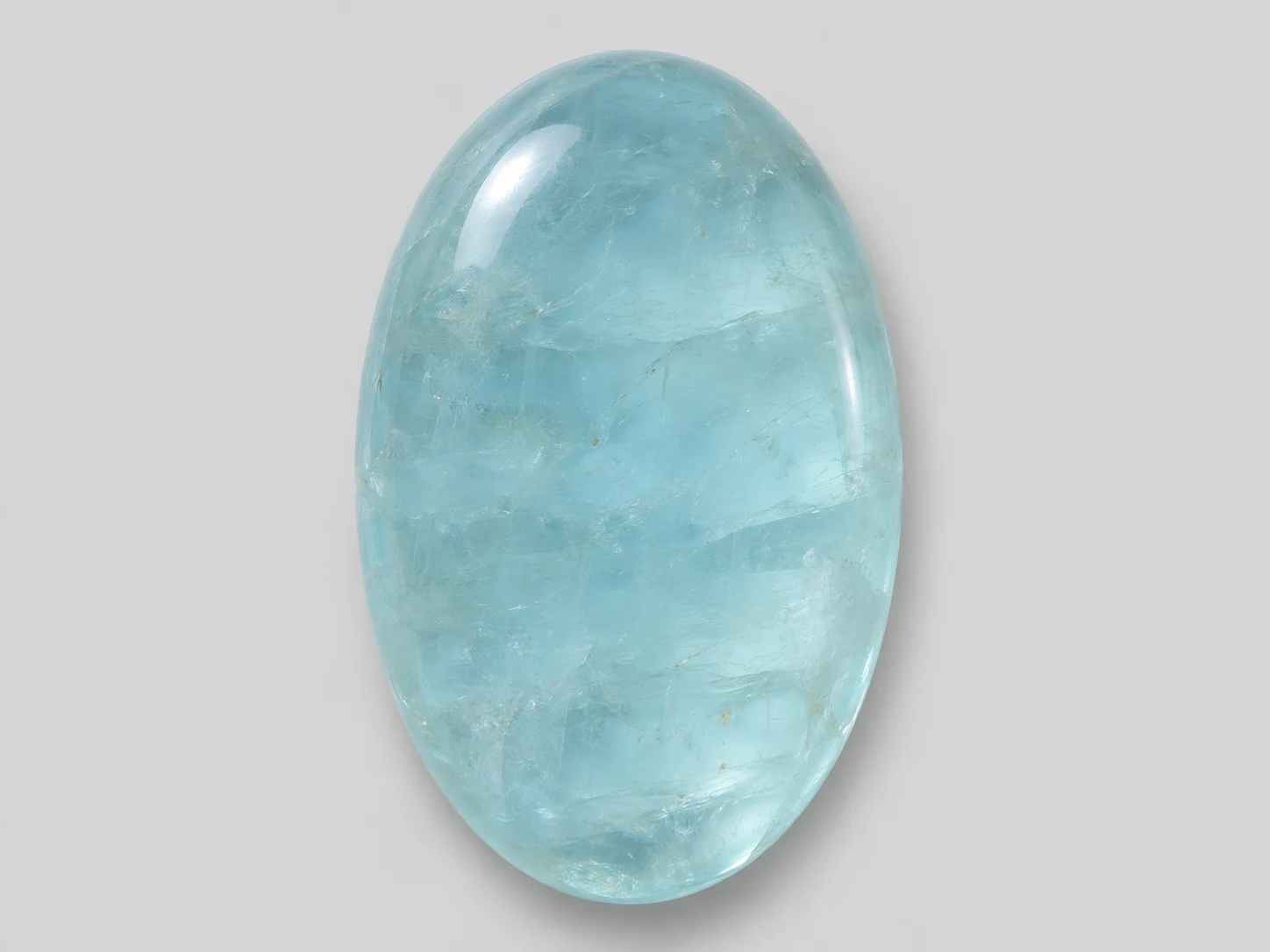
The blue to greenish-blue variety of beryl.
Colors & patterns
Pale watery blue through deeper blue, sometimes greenish.
Typical origins
Brazil is an important source; other sources include Pakistan, Madagascar and parts of Africa.
Hardness
7.5–8 on the Mohs scale.
Choosing & setting this material
Translucent cabs can display delicate internal textures. Heating to reduce green tones is common; ask for treatment disclosure and protect included stones from impacts.
Care & cleaning
Clean gently with lukewarm water, a little mild soap and a soft cloth, then dry. Avoid steam, ultrasonic cleaners, harsh chemicals and sudden temperature changes, especially when treatments are unknown.
Color & pattern: every cut is different
Typical colors and patterns: Pale watery blue through deeper blue, sometimes greenish. Shade, saturation, translucency and the distribution of inclusions or matrix can differ between specimens and between cuts from the same rough. Request the colors and features you prefer, but expect each natural cabochon to have its own character.
How the cut affects appearance
The direction of the cut and the outline determine which part of the rough becomes the face of the cabochon. A round, oval or freeform cut can emphasize different features. Dome height and polishing change how surface reflections appear; in translucent material, thickness and backlighting can also affect the apparent depth of color.
Planning your custom cabochon
For a specific setting, provide the finished length, width and total height in millimeters, measured from the flat back to the highest point of the dome. Mention whether you prefer a low, medium or high dome, and any bezel restrictions. For earrings or a coordinated set, specify the total stone count and how closely the color, pattern and size should match.
What to check before choosing
Before approving a particular cabochon, review clear face, side and back photographs, its dimensions, any visible chips or fractures, and disclosed treatments. Compare pictures in neutral light: lighting, camera processing and your screen can alter the color you see. Availability and suitability for a custom cut need confirmation.
Origins above describe typical sources of the material, not the origin of an illustrated or stocked stone. Hardness measures scratch resistance, not resistance to breaking. Confirm the identity and treatments of the actual piece.
Planning your Aquamarine cabochon
What to specify in your request
Explain whether pale blue color or a clear, translucent appearance matters most.
Before choosing the final cut
Ask for a photograph over the intended backing color before deciding on the final thickness.
Include your finished length, width and height in millimeters, quantity and intended setting. Request a aquamarine cutting quote or review how the cutting service works.
Further reading: Material reference · GIA: gem treatments